Topography
Yuta Chiba (2015, 2016, 2018)
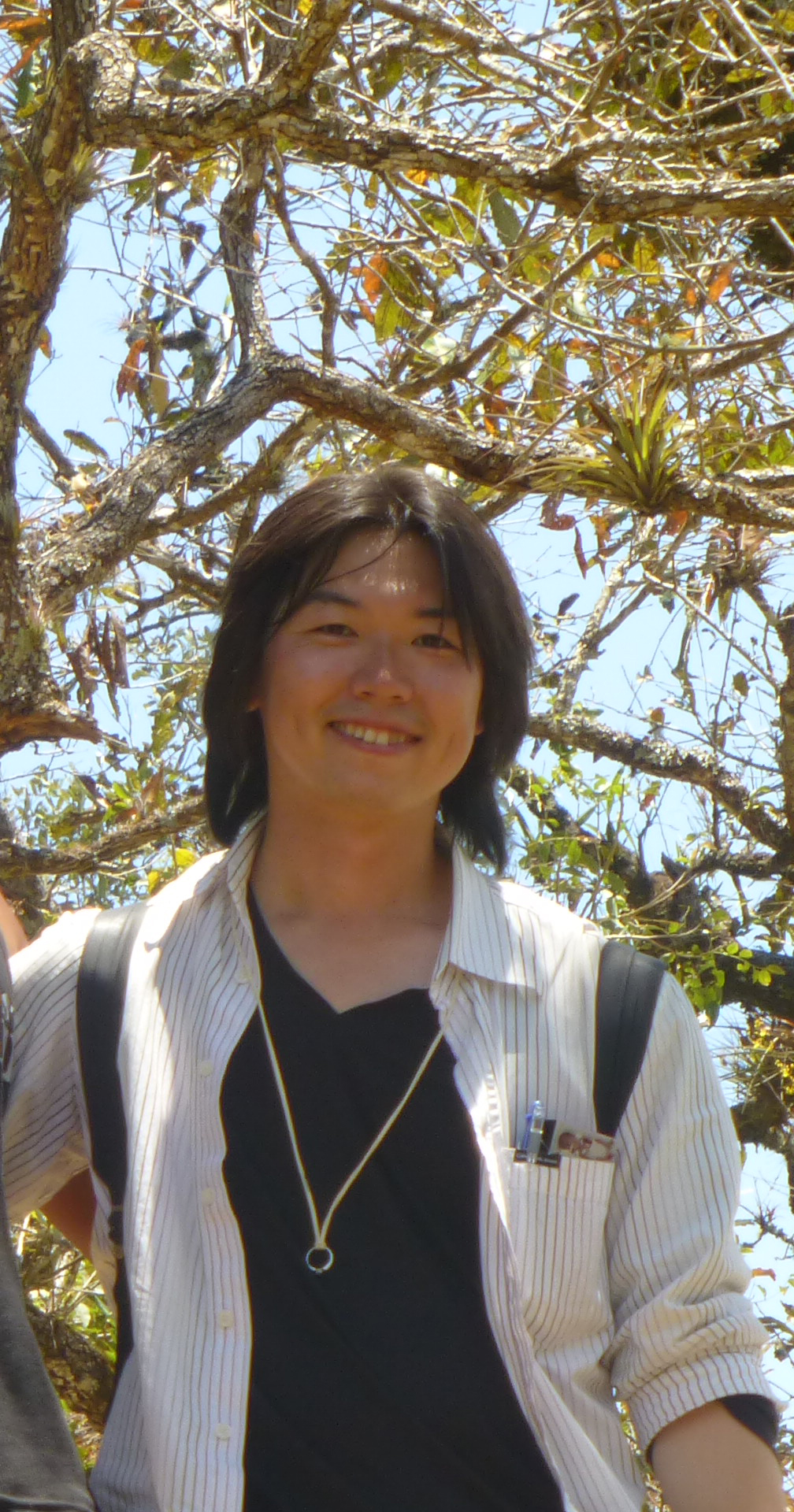
Yuta received his education in International Culture Studies from Aichi Prefectural University in Japan. His most recent research, which focuses on the material culture and symbolic use of precious stones such as obsidian, amber, and pearl, resulted in his master’s thesis entitled “Medical and Medicinal Obsidian Use in Mesoamerica: Materialization of Divine Curative Power.”
Yuta has collaborated on multiple archaeological projects in both obsidian analysis and topography, including “La Ventilla” in Teotihuacan as well as in Cholula and Templo Mayor in Mexico and Copan in Honduras. He was in charge of topography for the Plaza of the Columns Complex Project in 2015 and 2016.
María Amparo Robles Salmerón (2017-2019)
Amparo earned her bachelor’s degree in Anthropology with a minor in Archaeology in 2008 and master’s degree in Anthropological Studies of Mexico in 2012 from the University of the Americas Puebla (UDLAP) in Cholula, Mexico. Her research interests include the rise of urbanism and development of early state societies in the Centra l Mexican Highlands. She has specialized in the generation and development of digital maps of ancient architecture for archaeological research projects like the “Proyecto Tetimpa” (2003-2007 and 2010-2012) at the Cholula Great Pyramid, the “Proyecto de Interacción Política de Yucatán” (2008) on the Maya Lowlands, the “Proyecto Templo Mayor“ (2017, 2019), and recently the “Proyecto Complejo Plaza de las Columnas” in Teotihuacan (2017-2019).
Abisai Medrano Rodríguez (2025-2026)
Abisai is originally from San Juan Teotihuacan, and he studied Topographic and Geodetic Engineering at UNAM. He has spent most of his career performing oceanographic work as a Watch Officer and part of the topographic engineers’ brigade with different projects and companies in places like Brazil, the Persian Gulf, Mexico, and the North Sea
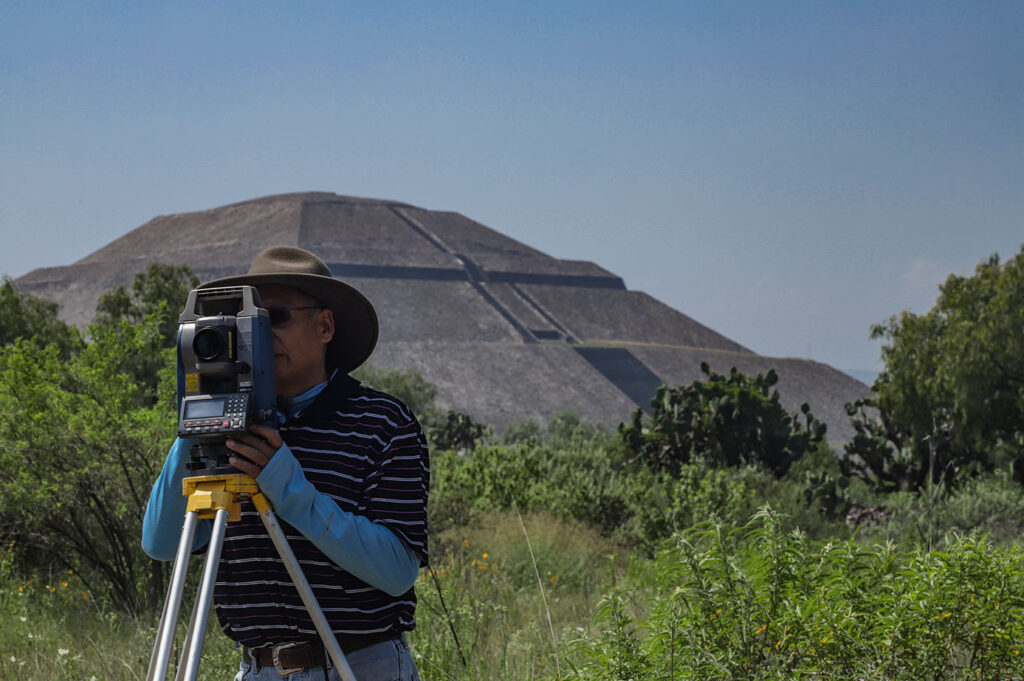
He has experience managing electronic, acoustic, and satellite equipment, as well as data analysis. He started working on the project in 2025 and focuses primarily on processing LiDAR-generated point clouds for archaeological research and on topographic mapping during field excavations.