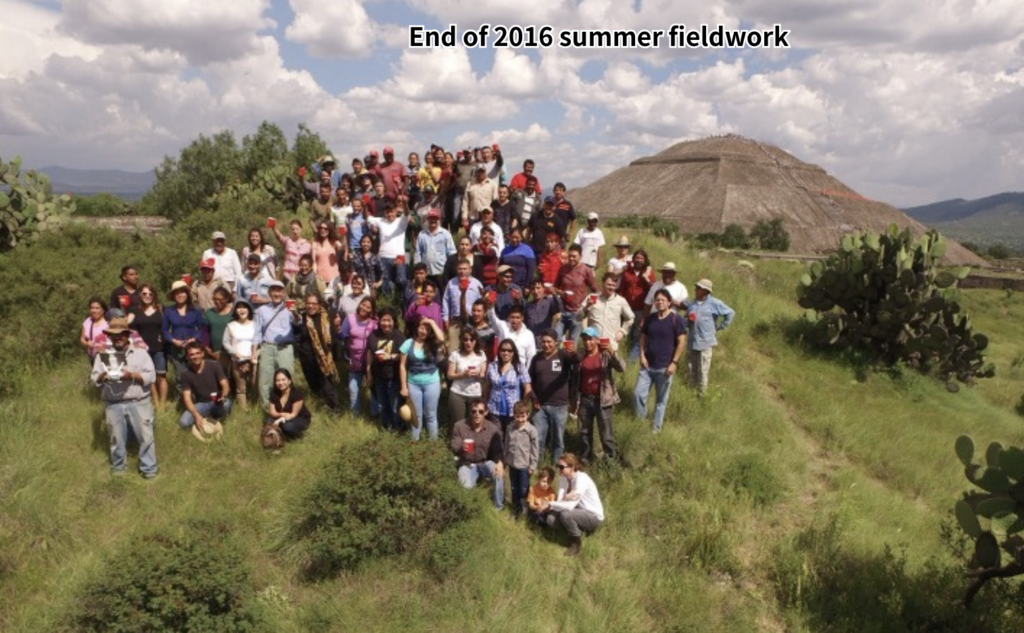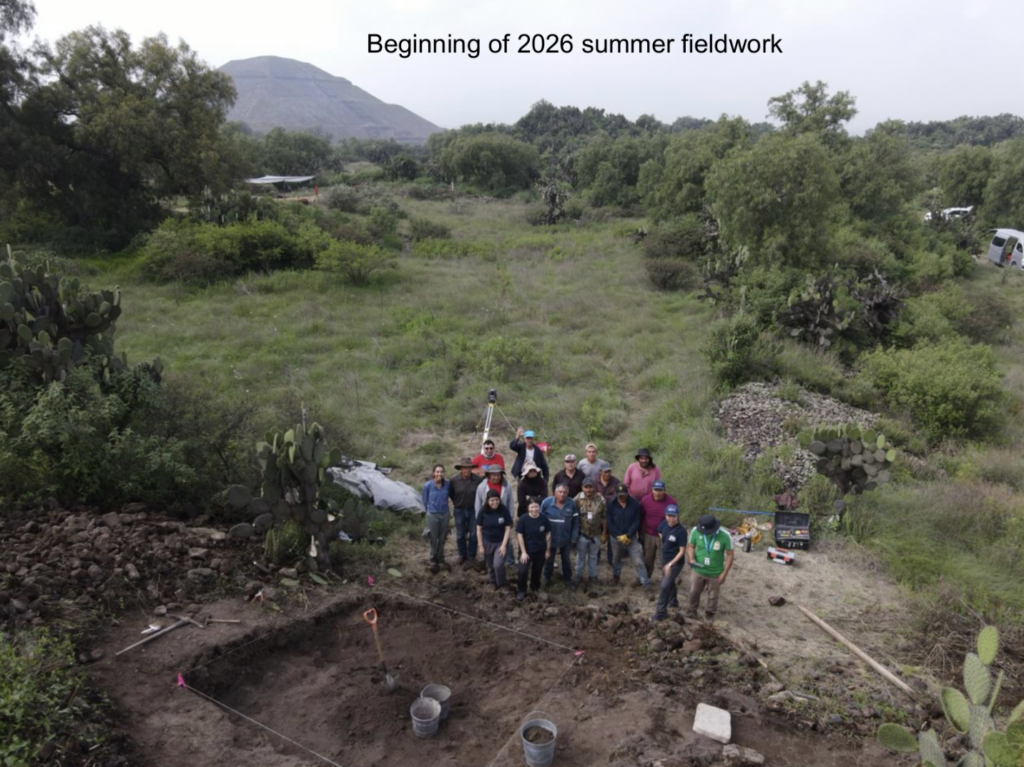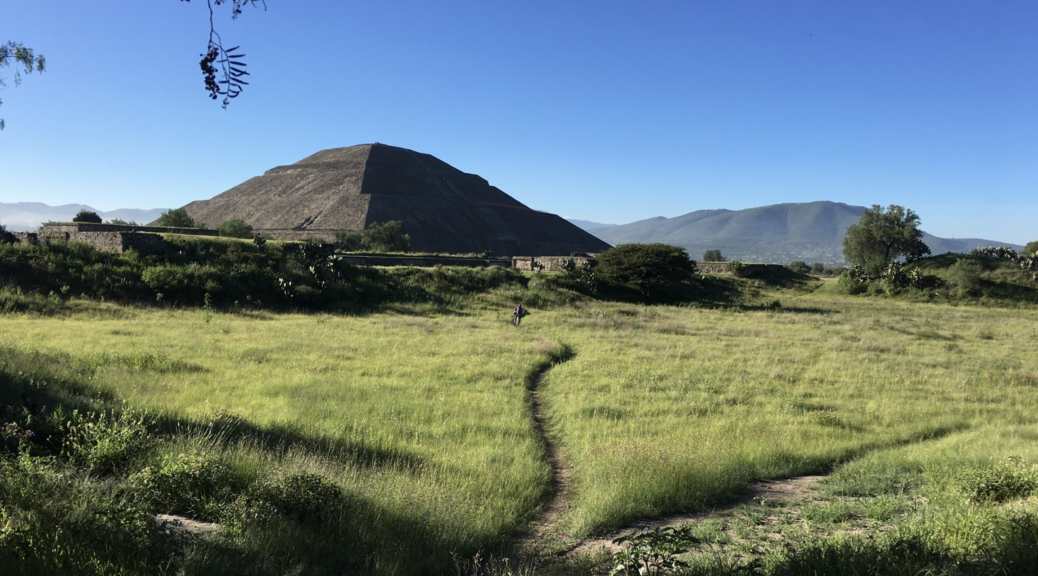
TEOTIHUACAN Crowdfunding Project 2026~


Your Contribution Protects Our Cultural Heritage:
Investigating Sovereignty at Teotihuacan
Initiated in 2015, the Project Plaza of the Columns Complex (PPCC) investigates the structural dynamics of political authority and urban organization at Teotihuacan, a UNESCO World Heritage Site in central Mexico. Positioned centrally along the Avenue of the Dead between the Sun Pyramid and the Moon Pyramid, the project offers a critical spatial and material nexus for examining how large-scale monumental core was formed, maintained, and ultimately dismantled. Our research focuses on the nature of Teotihuacan’s sovereignty through time—specifically evaluating whether civic coordination was executed through collective governance, corporate elites, or an autocratic administrative apparatus.
Following disruptions cause by Covid-2019 pandemic, project operations were restructured in 2022 under the co-directorship of Dr. Nawa Sugiyama (UCR), Dr. Saburo Sugiyama (ASU), and Archeologist Rogelio Rivera Chong (INAH). Current efforts, supported primarily by the Japan Society for the Promotion of Science (JSPS), the National Science Foundation (NSF), the National Endowment for the Humanities (NEH), concentrate on the northern sector of the complex, hypothesized to serve as the administrative headquarters and/or residential “palace” of Teotihuacan’s leadership.
Archaeological investigation and institutional heritage management require sustained financial support, particularly for field labor, materials conservation, and specialized laboratory analyses. Over the past five years, a combination of sharp local inflation in Mexico and a significant depreciation of the Japanese yen against the Mexican peso has effectively reduced our primary JSPS funding capacity to under 25% of its initial value. Concurrently, competitive international grant funds from U.S. federal agencies face unprecedented constraints.
Without supplemental funding, essential field excavations, specialist processing, and conservation efforts risk severe curtailment or indefinite suspension. To ensure the continuity of this work, we are inviting financial contributions through a global crowdfunding campaign.
Understanding how ancient societies established, consolidated, and negotiated power remains a fundamental question in political archaeology –one with profound implications for how we understand authority, governance, and institutional resilience in human history. By supporting this campaign, contributors directly enable ongoing field research, material preservation, public dissemination of project outcomes, and open scholarly discourse on the institutional origins of power– one of the most fundamental inquiries during the current worldwide conflicts.
Join our exploration team with your donations to discuss the mysteries of Teotihuacan and critical issues for current and future societies.
1. The Ancient City of Teotihuacan: Spatial Context and Urban Form
Situated approximately 50 km northeast of modern Mexico City at an elevation of 2300 meters above sea level, Teotihuacan has stood as a monumental focal point of Mesoamerican urbanism for nearly two millennia. Intensive archaeological investigation since the 19th century has established that at its peak during the Classic period, Teotihuacan was the most populous urban center in the Western Hemisphere during its time, housing an estimated population exceeding 100,000 residents.
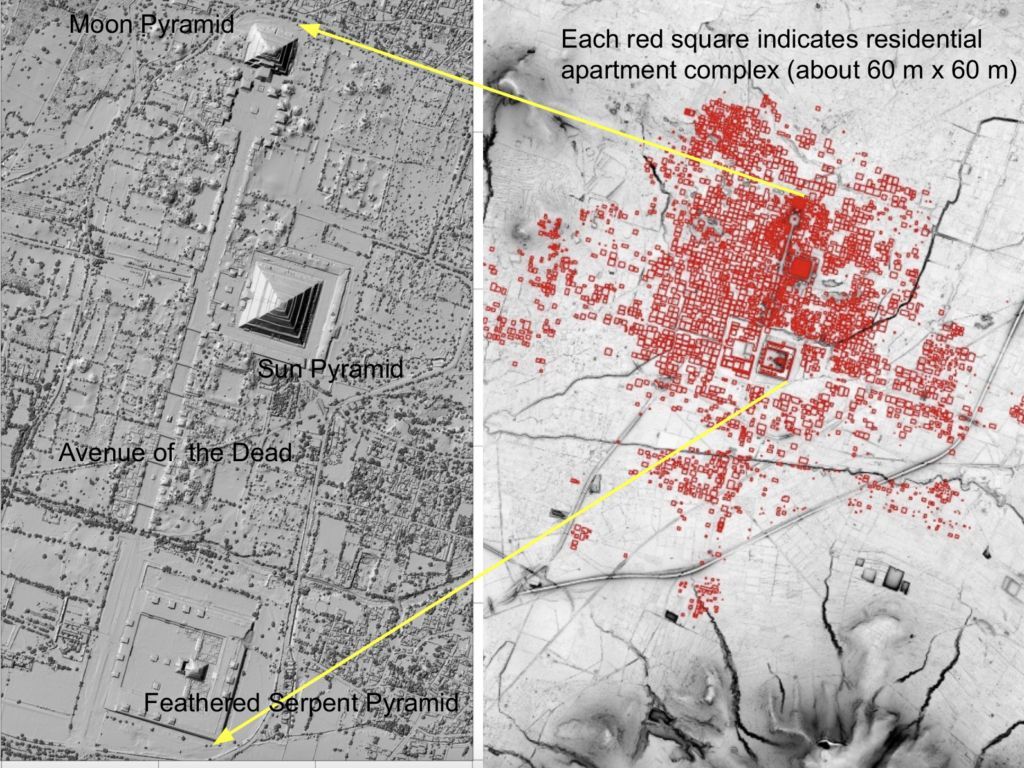
Despite decades of research by our project members, fundamental questions persist regarding the site’s political genesis and social organization. Previous tunnel excavations beneath the city’s three primary monumental pyramids revealed elaborate sacrificial burials containing exceptionally rich offerings. These contexts reflect a complex cosmological worldview underscored by state-sponsored militarism. However, key structural dimensions of this metropolis remain unresolved: its ruling elite remained largely “anonymous” or non-depicted in state art, and the precise ethnic composition driving its urban cityscape remains subject to debate.
Recent empirical data demonstrates that Teotihuacan was a multi-ethnic urban center maintained through extensive political, economic, and ceremonial networks spanning Mesoamerica. Because Teotihuacan lacked an explicit, deciphered writing system analogues to that of the Classic Maya, scholars remain divided on its political structure. Central to current debates in Mesoamerican archaeology is whether the state operated under autocratic governance led by despotic rulers or via a corporate, collective governance structure managed by council representatives. The Project Plaza of the Columns Complex addresses this question directly by providing robust excavation data to reconstruct the nature of Teotihuacan sovereignty.
2. Mayor Discoveries by PPCC
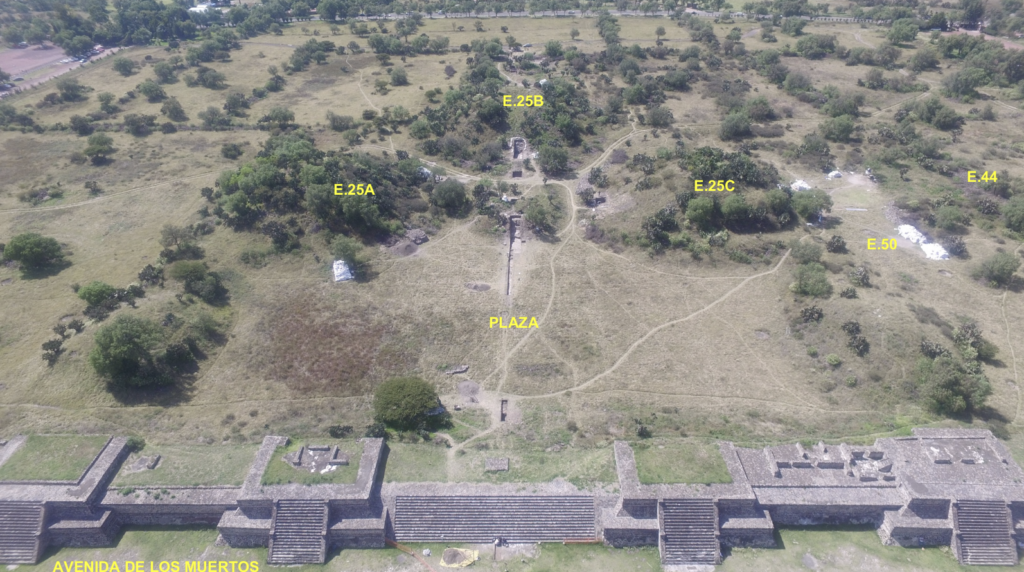
Systematic excavations by PPCC since 2015 across six fronts within the Plaza of the Columns Complex have yielded critical empirical data regarding the spatial loci and material culture of Teotihuacan’s administrative core. Key findings include:
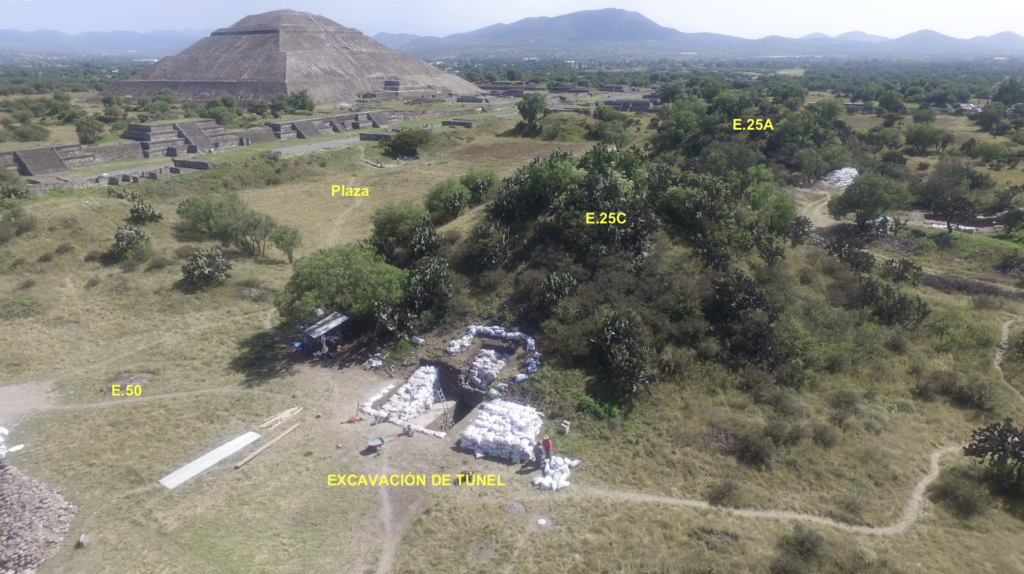
- Feast Diplomacy and Commensal Politics:
Sub-floor primary deposits beneath the plaza floor yielded an extraordinary volume of ceramic serving vessels. Analysis indicates large-scale state-sponsored feasts ̶potentially hosting upwards of 1000 participants, including foreign Maya dignitaries ̶held to commemorate the dedication of the complex. - Maya Interaction and Interregional Artisanship:
The project uncovered nearly 1000 polychrome mural fragments featuring distinct Classic Maya iconography. This discovery provides direct material evidence of high-level diplomatic, political, and artistic engagement between Teotihuacan’s ruling authorities and Maya royal dynasties, reshaping current models of Classic-period interregional dynamics. - Administrative Architecture and Civic Headquarters:
Architectural data revealed spatial configurations consistent with a state administrative center. This complex is hypothesized as a civic headquarters, incorporating facilities for state decision-making, administrative workspaces, and palatial residential quarters for Teotihuacan’s elite leadership. Confirming this structural hypothesis serves as the primary objective for our current research phase.
3. Research Focus: Identifying Administrative Headquarters (HQ) and Elite Residential Architecture
By the second century CE, the ancient city of Teotihuacan had established itself as the primary urban center for the Mexican Central highlands. Without clear regional precedents, Teotihuacan emerged as a monumental, highly planned metropolis constructed on an unprecedented scale. Current models suggest that the city’s population grew rapidly due to incoming multi-ethnic migrant groups displaced by volcanic eruptions of Popocatepetl and Xitle (southern Basin) between the first and third centuries CE respectively. This demographic influx coincided with the consolidation of a highly symbolic cityscape anchored by its three monumental pyramids. However, fundamental questions persist regarding how (and by whom) the metropolis was established and managed, and ultimately collapsed.
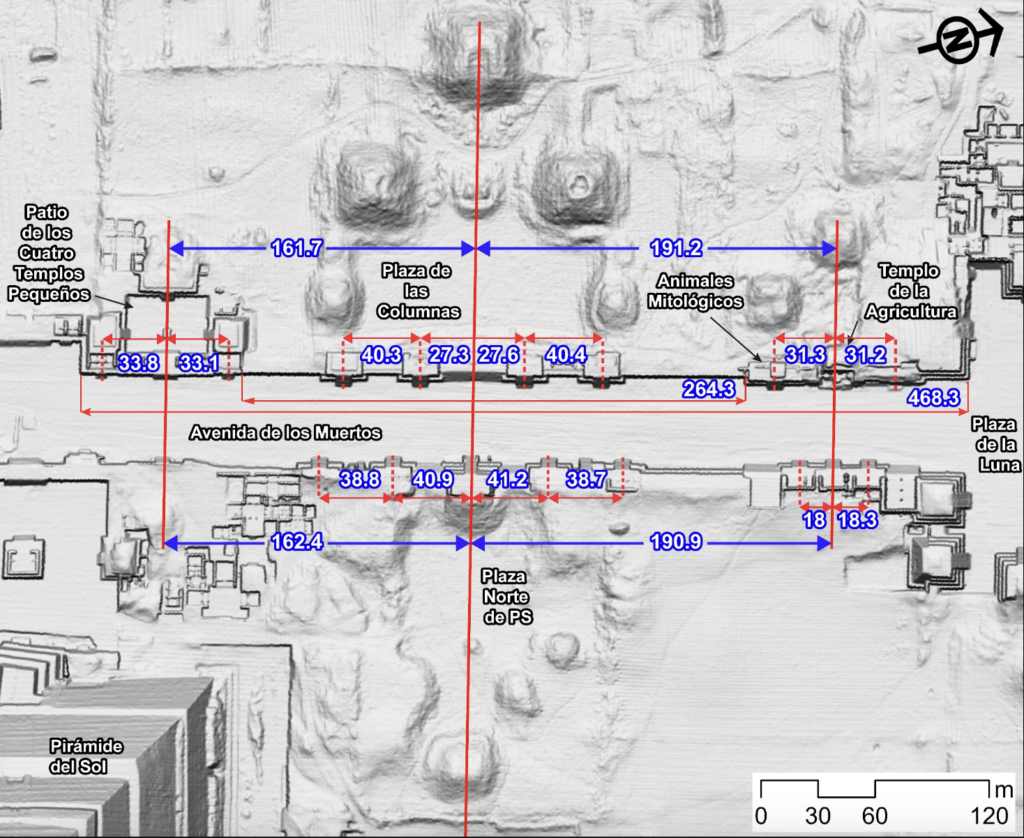
Around 200 CE, the Sun Pyramid, the Moon Pyramid’s fourth monumental stage, and the Feathered Serpent Pyramid (with the Citadel) were constructed along a shared spatial axis anchored by the Avenue of the Dead. Built shortly thereafter in the 3rd and 4th centuries CE, the Plaza of the Columns Complex, with three primary monuments representing the fourth-largest pyramids in the city, featured a large scale ceremonial unit comparable to three monumental complexes. Its central location between the most conspicuous Sun and Moon Pyramids highlights it strategic spatial importance and administrative function. Our excavation findings confirm that the PCC was an enclosed complex bounded by massive perimeter walls, with restricted access from the Avenue of the Dead, designed to host exclusive state events, including civic rituals, mass feasting, and high-level diplomatic assemblies.
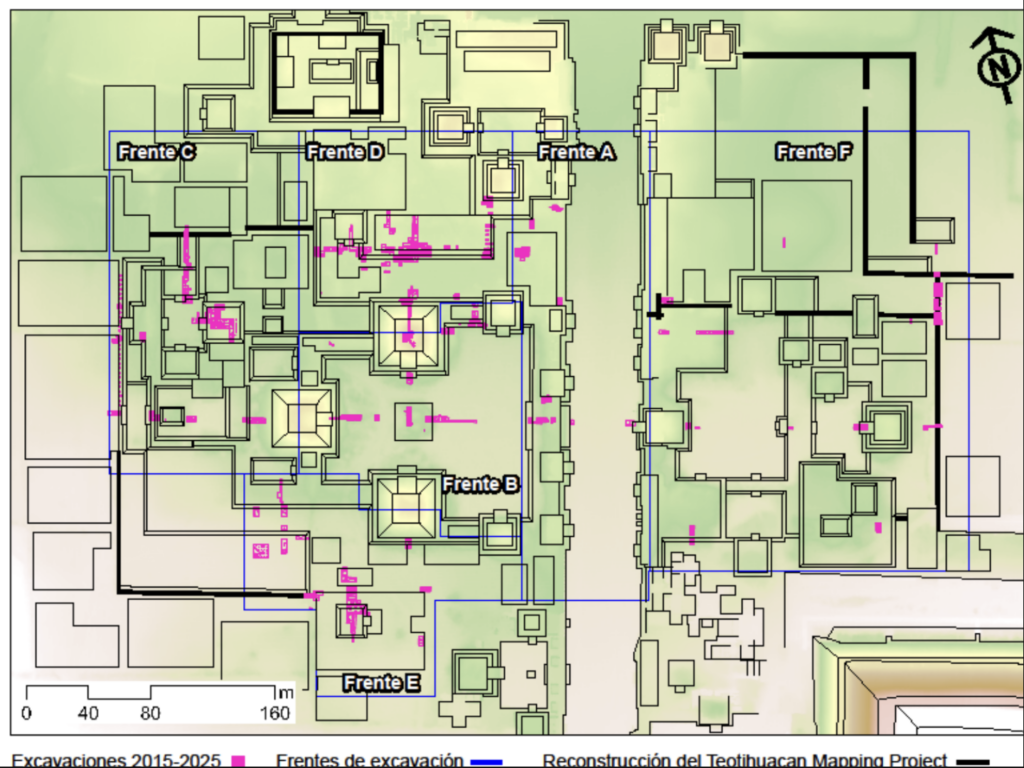
Recent excavations in 2024-25 uncovered that the northern sector of the complex (Compounds 43, 44, 38, and 37), a elevated space demarcated by thick walls, operated as a distinct, restricted sub-complex from the site’s earliest phases. Although post-collapse looting over the centuries disturbed original contexts, crucial architectural features and high-status material culture were recovered.
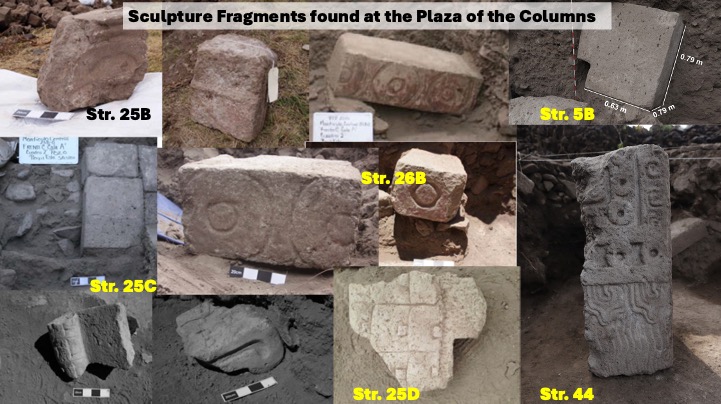
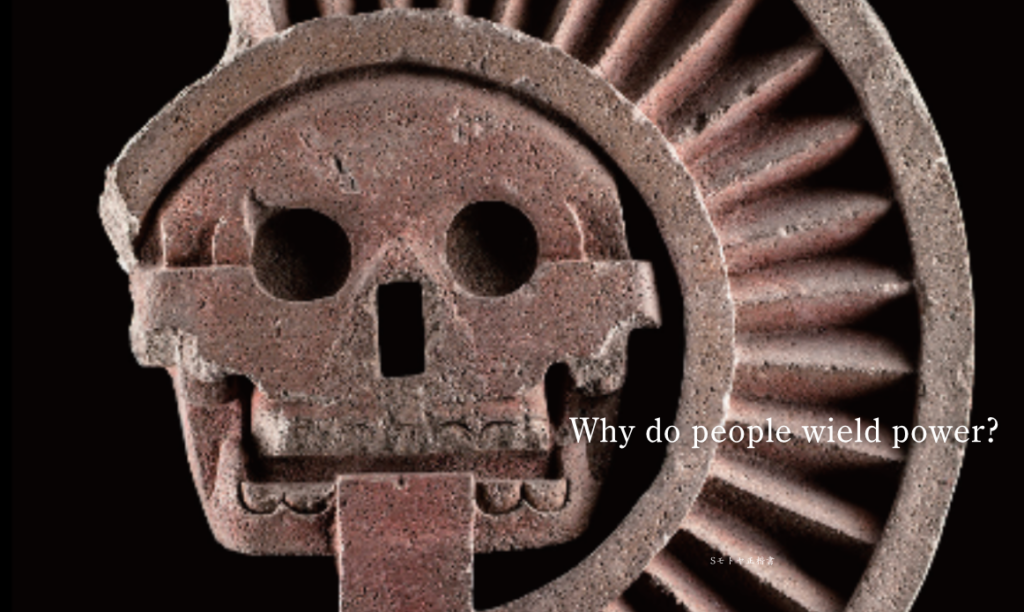
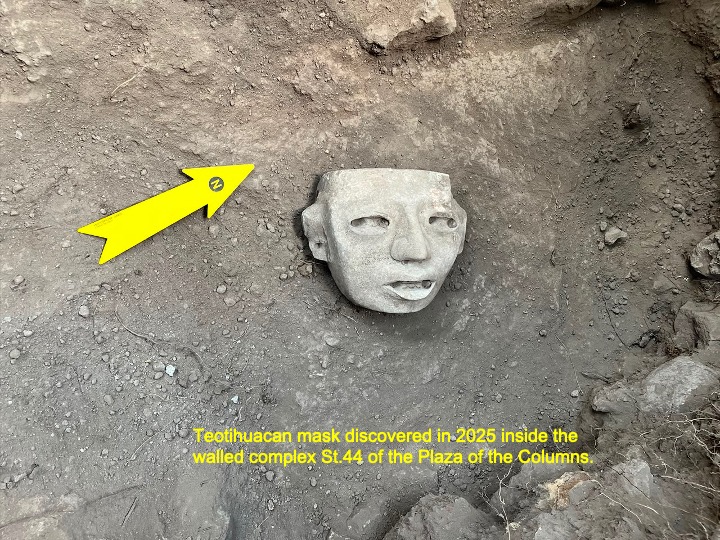
Fragments of elaborate stone sculptures confirm the presence of high-status masonry architecture within the inner complex. Furthermore, rare prestige items including a Teotihuacan mask and Maya mural fragments, point to sustained diplomatic interactions with distant ruling elites, and suggest that this compound served as the residence for Teotihuacan’s ruling class. Targeted excavations within these defined structures provide a unique opportunity to evaluate the structural evolution of sovereignty at Teotihuacan over time.
4. Principal Investigators and Key Personnel
Project Directors and Leadership
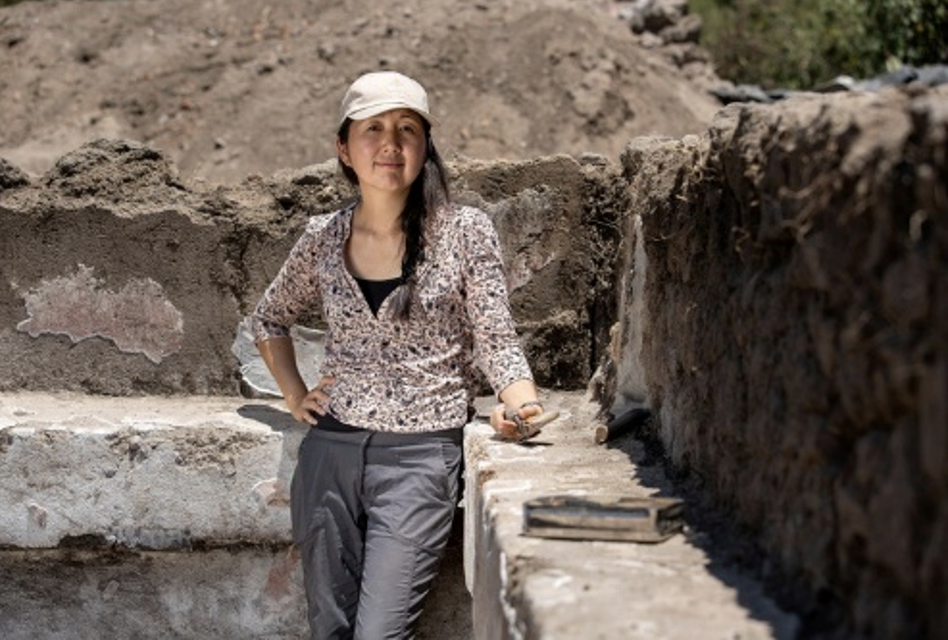
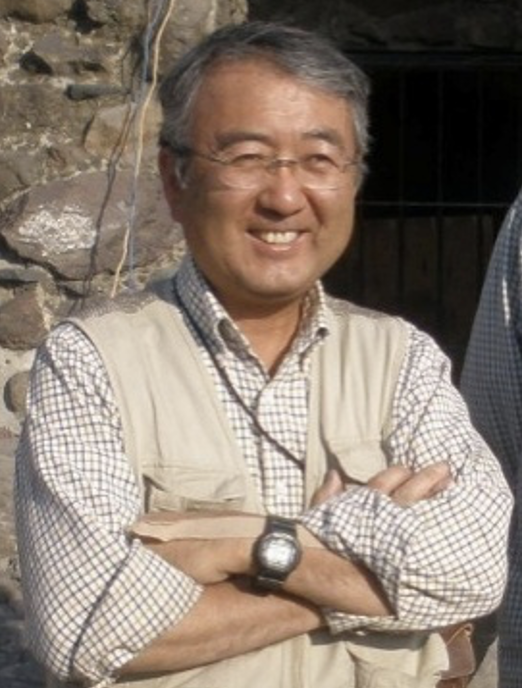
Dr. Nawa Sugiyama
Co-Director, Project Plaza of the Columns Complex (PPCC).
Associate Professor, University of California, Riverside / Visiting Researcher, Research Institute for the Dynamics of Civilizations, Okayama University.
Dr. Saburo Sugiyama
Co-Director, PPCC.
Research Professor of the School of Human Evolution and Social Change, Arizona State University/ Visiting Researcher, Research Institute for the Dynamics of Civilizations, Okayama University, co-director of 3D Reconstruction Project of Mesoamerican Cosmic Cities.
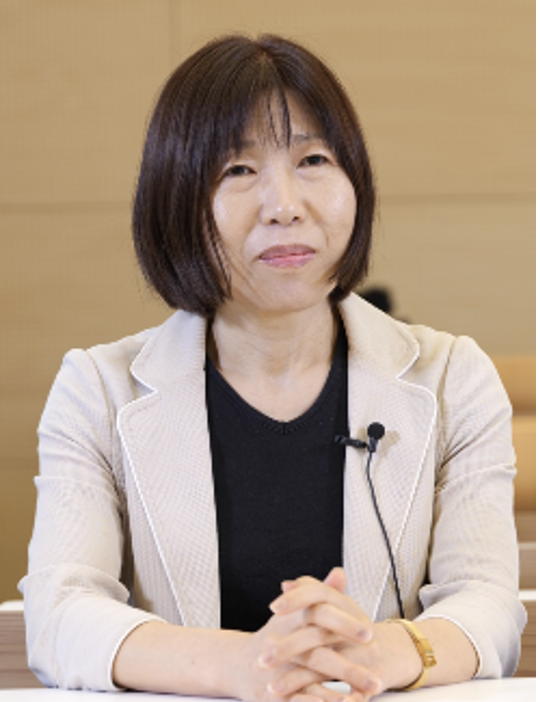
Dr. Naoko Matsumoto
Crowdfunding Project Representative.
Deputy Director, Research Institute for the Dynamics of Civilizations, Okayama University.
Lic. Luis Rogelio Rivero Chong
Academic Advisor, PPCC.
Director of Archaeological Monument Park at Teotihuacan, National Institute of Anthropology and History.
Research Team and Specialists
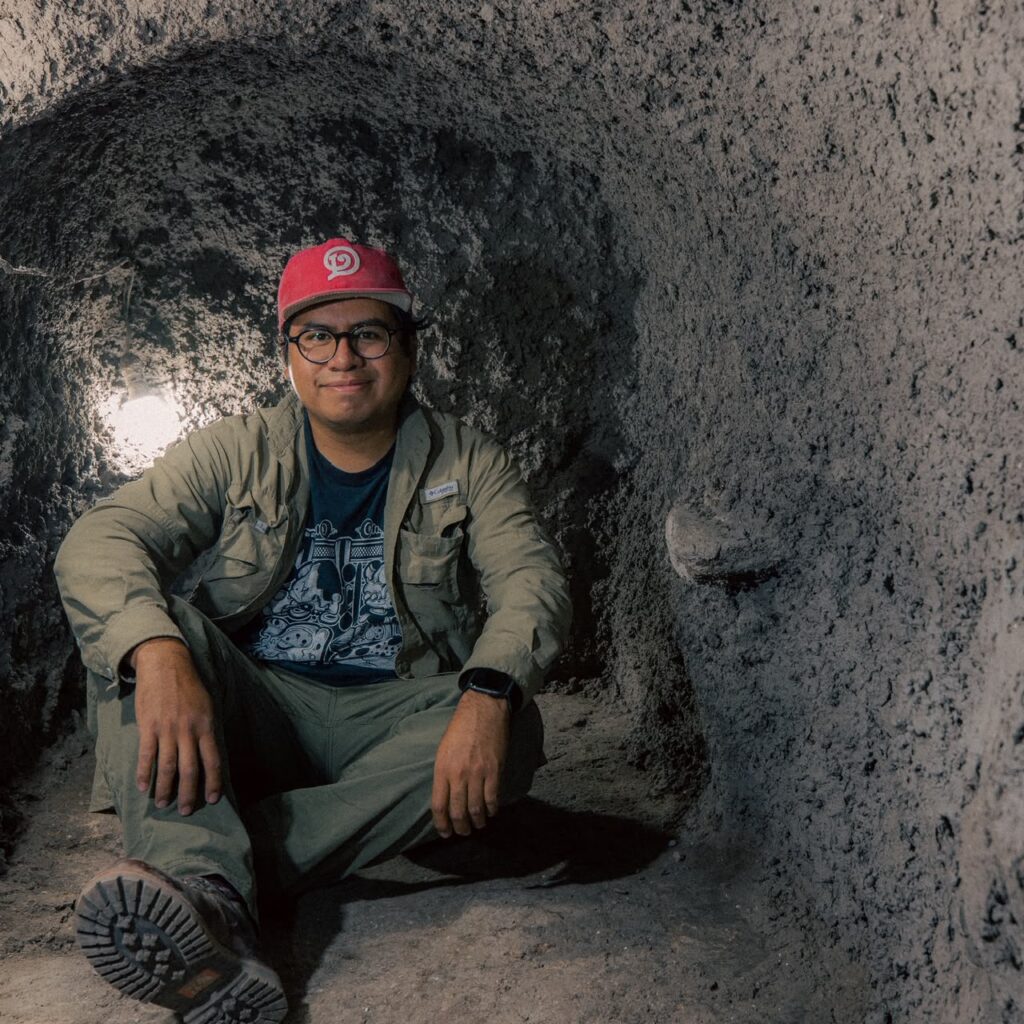
Ma. Ariel Texis Muñoz
Project Member, PPCC. Ph.D. Candidate at the University of California, Riverside.
Field excavations, 3D mapping, and GIS analysis.
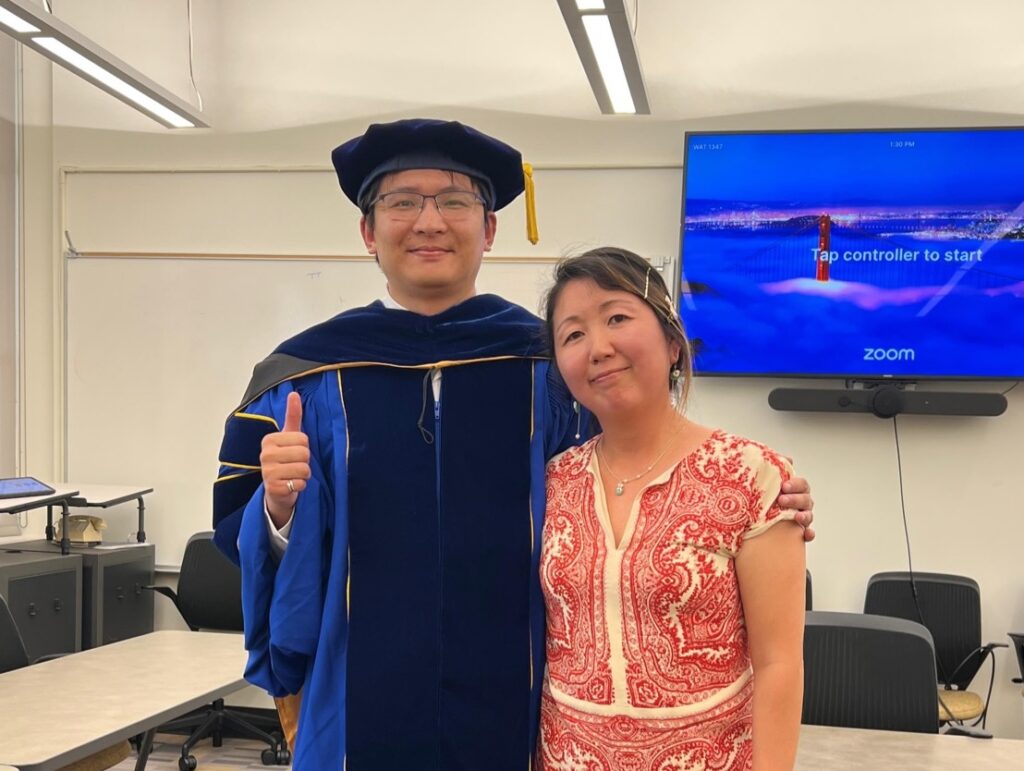
Dr. Yun Ge
Project Specialist, PPCC. Curator Shanghai Museum, Ph.D University of California, Riverside.
Field excavations, architectural analysis, and archaeobotany.
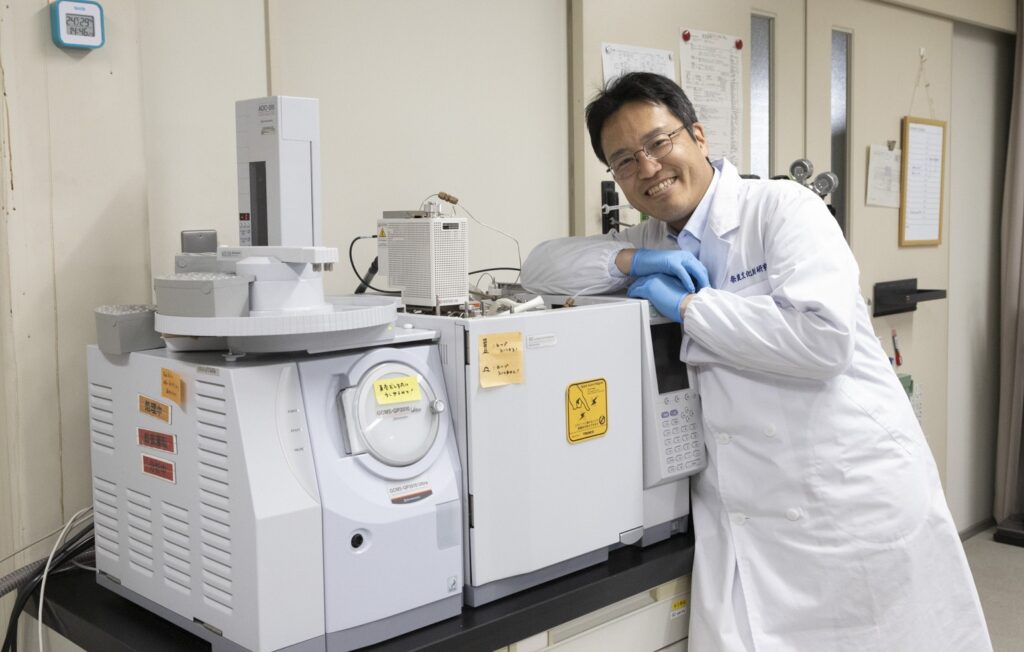
Dr. Shinya Shoda
Project Specialist, PPCC.
Head of the International Archaeology Section, Planning and Coordination Department, Nara National Research Institute for Cultural Properties, National Institutes for Cultural Heritage
Dr. Ryohei Takatsuchi
Project Member, PPCC. Ph.D. Candidate, University of California, Riverside.
Excavations, ceramic studies, petrography, archaeometry.
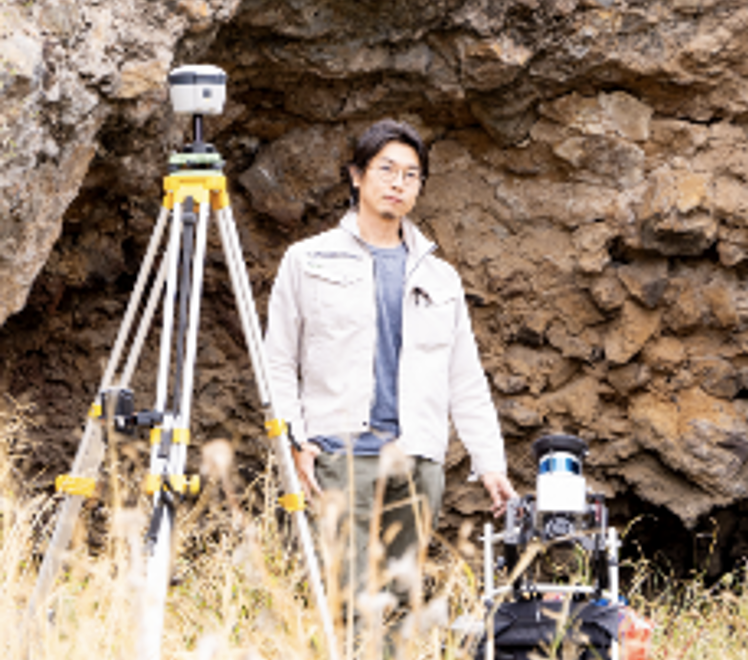
Dr. Yuta Chiba
Project Collaborator, PPCC. Lecturer, Nanzan University / Visiting Researcher, Research Institute for the Dynamics of Civilizations, Okayama University.
3D Mapping and Obsidian analysis. Collaborator, 3D Reconstruction Project of Mesoamerican Cosmic Cities.
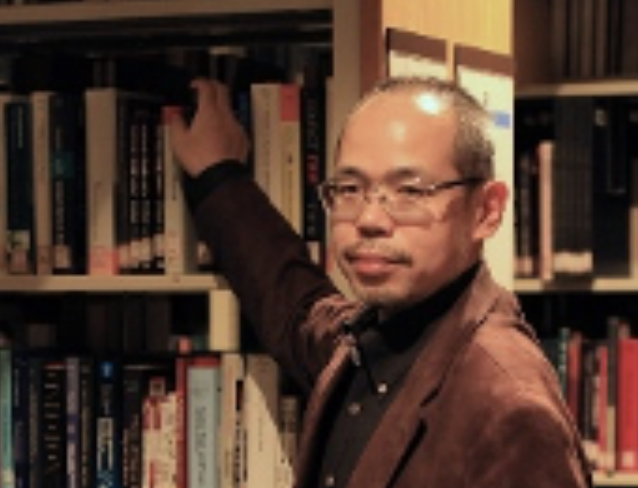
Kuninori Iwashiro
Project Specialist, PPCC. CEO of scienceNODE, Web/App Engineer, and Scientific Visualizer.
Astronomical Reconstruction & LiDAR Analysis.
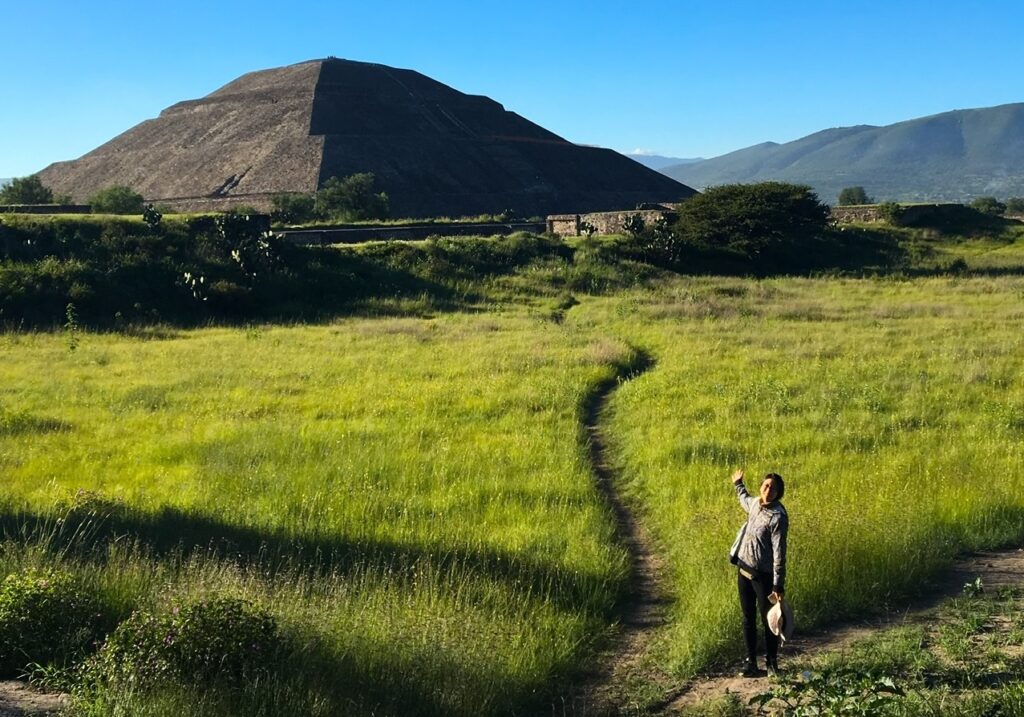
Reina Nishihara
Chief staff of Crowdfunding Operations.
5. How donate: Methods, Timeline, and Use of Funds
Donation Options:
Option 1: Direct Support (No Reward Tier).
Contributions of any size directly fund our fieldwork and conservation efforts.
Us and international supporters can donate via Myriad USA in custom increments
(e.g. $50, $100, $250, and onwards).
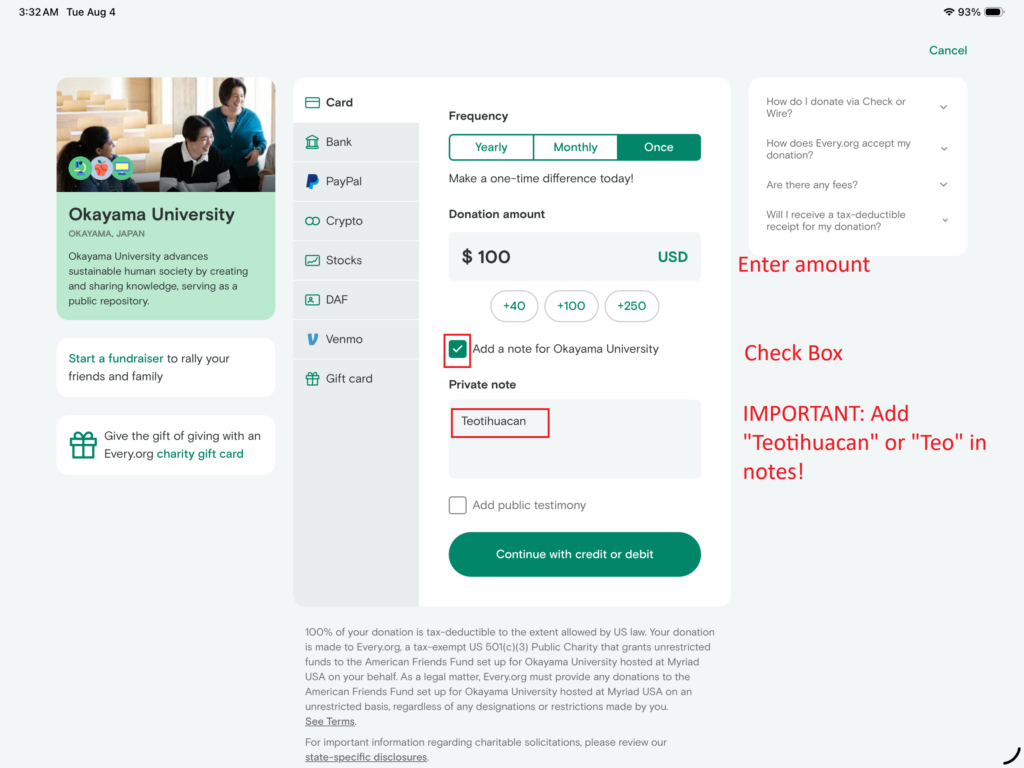
IMPORTANT Designation Instructions:
When processing your payment, please select “Add a note for Okayama University” and write “Teotihuacan” (or Teo) in the private memo field. This ensures your contribution is routed directly to the PPCC project. If you are requesting a tiered donation reward, please enter your requested donation reward and contact information.
Option 2: Tiered Donation Rewards.
You can choose one among the following options.
- Over $100: Optional enrollment in our digital mailing list to receive activity reports through the end of the excavation period.
- Over $300: Exclusive access to a virtual lecture hosted by project members.
- Over $1000: Invitation to an exclusive, on-site group visit during fieldwork in 2027 (+exclusive commemorative gift).
- Over $2000: Private, small-group on-site lecture and guided tour of the local site museum by project co-director during fieldwork in 2027 (+exclusive commemorative gift).
- Over $3000: Comprehensive 1- to 2- day experience with your small group including on-site lecture and visits in local museums, Aztec Great Temple, National Museum of Anthropology in Mexico City with project member (+exclusive commemorative gift).
Guided Tour Terms & Conditions:
Please make sure to read the following carefully before selecting the “Teotihuacan Guided Tour & gift (Optional)” or “Teotihuacan and Nacional Museum of Anthropology Guided Tour & gift (Optional)” rewards.
* Guided site tours will take place in July or August 2027. Available dates will be communicated to eligible donors by late February 2027. Donors are responsible for their own travel and accommodations to and from Mexico. Tour begins and end at the Teotihuacan archaeological site. If active excavation work is underway during your visit, participants will receive behind-the-scenes access to active trenches and lab visit.
Payment Methods:
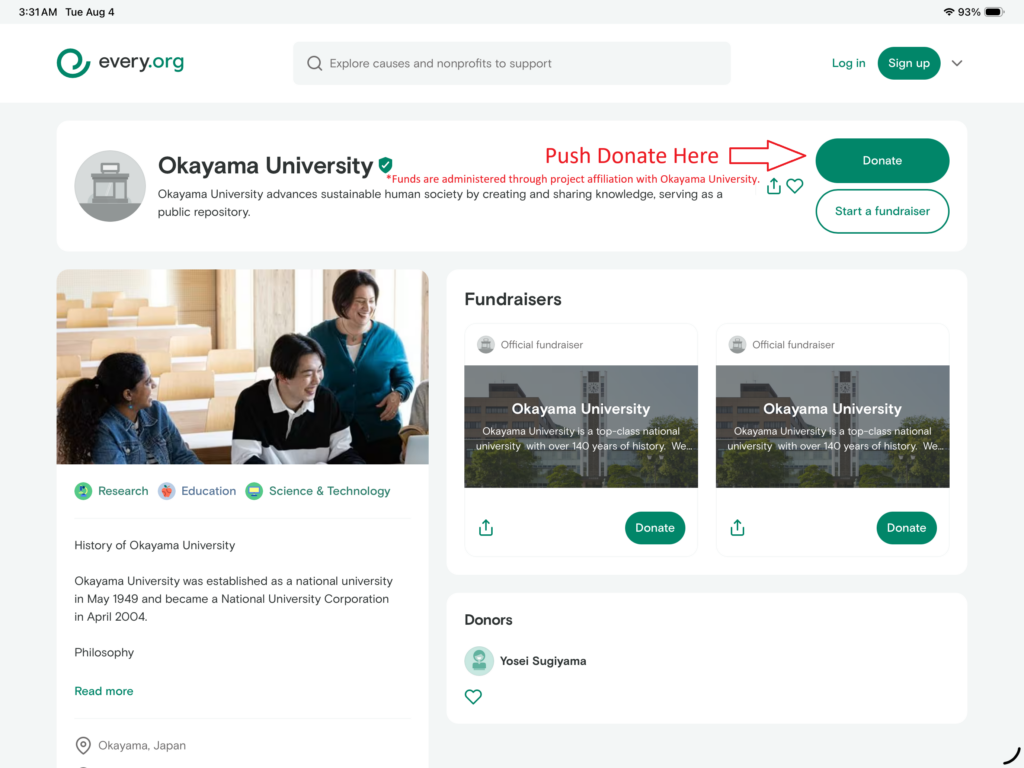
Credit/debit Card: You can donate instantly online using any major credit or debit card through Myriad USA portal via Okayama University. CLICK HERE
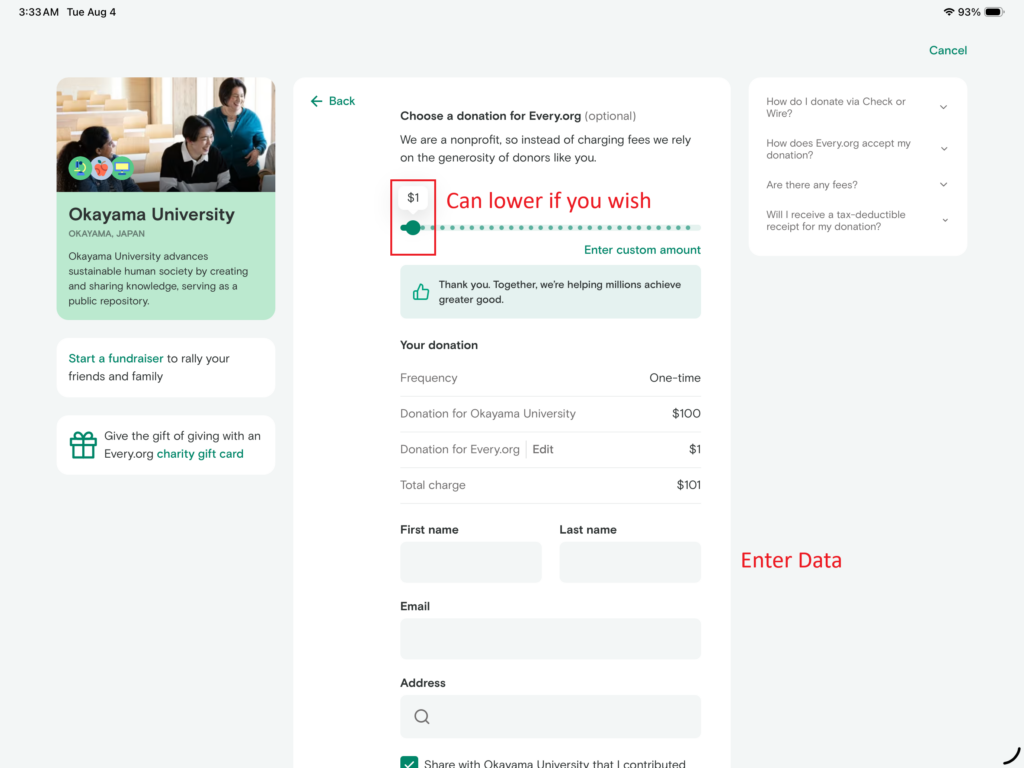
While processing your DONATE below, you will see, Choose a donation for Every.org (optional). You may choose, Donation for Every.org/Edit, and can reduce or cut extra expense.
Tax-deductibility Notice
Official tax-deductible receipts issued through Okayama University are restricted to Japanese taxpayers only under Japanese tax law. English tax-deductible documentation cannot be issued for international tax authorities outside Japan.
Project Time Line (2026-2027)
This year-long crowdfunding project funds intensive field research and laboratory analyses scheduled through July 2027. The first year project (12 millions yen in total) targeted to carry out mainly the summer fieldwork in 2027 (June~August), and following material analyses and preservation works.
- July–August 2026: Preliminary exploratory excavations at the “Northwest Palace,” executed with support by a Japanese government grant (Kakenhi Grant-in-Aid for Scientific Research A).
- August 2026–May 2027: LiDAR spatial data processing, material conservation, and laboratory analysis of recovered artifacts.
- June–August 2027: Intensive, large-scale excavations targeting the central “Palace” compound.
- We will plan 2028-2029 research taking into account the outcome of 2026-2027 excavations, laboratory, and preservation works.
Allocation and Use of Funds
◉ Phase 1 Fundraising Goal: ¥4,000,000 JPY (~$25,000 USD)
- Artifact Conservation and Scientific Analysis: Stablization, preservation, and chemical analysis of prestige artifacts unearthed near the central compound to evaluate markers of elite state authority.
- LiDAR mapping and spatial analysis: High-resolution lidar data mapping to examine urban grid alignment, spatial planning, and astronomical orientations.
- Administrative Operations: Platform hosting fees and processing expenses.
◉ Phase 2 Target Goal: ¥12,000,000 JPY (~$75,000 USD)
- Fieldwork Operations: On site operation, labor costs, equipment, and logistical support for primary excavations from June to August 2027.
- Post-Excavation Processing and Material preservation: Extended post-fieldwork laboratory processing, isotopic testing, radiocarbon dating, and artifact stabilization.