Analysis of osteological remains
Jorge Nukyen Archer Velasco (2015)
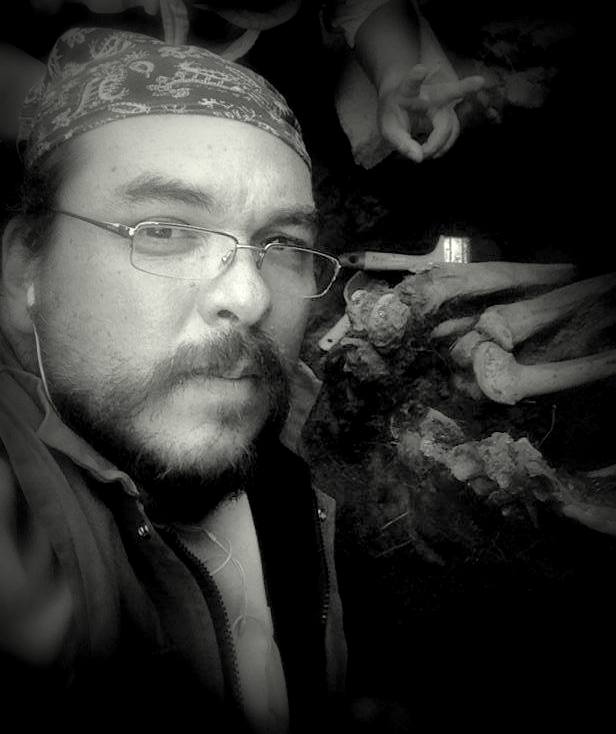
Originally from Mexico City, Jorge graduated with honors from the National School of Anthropology and History (ENAH) where he received his master’s degree in Physical Anthropology with a specialization in ancient migration. He is a specialist in bioarchaeological research and also in the analysis and digitization of funerary contexts.
He has collaborated on multiple projects in Teotihuacan since 2004, including but not limited to the Barrio Oaxaqueño Project, the Sun Pyramid, La Ventilla, and the Feathered Serpent Pyramid. He was responsible for analyzing part of the first season’s human burial osteological material.
Teresa Hsu (2016-2019, 2022)
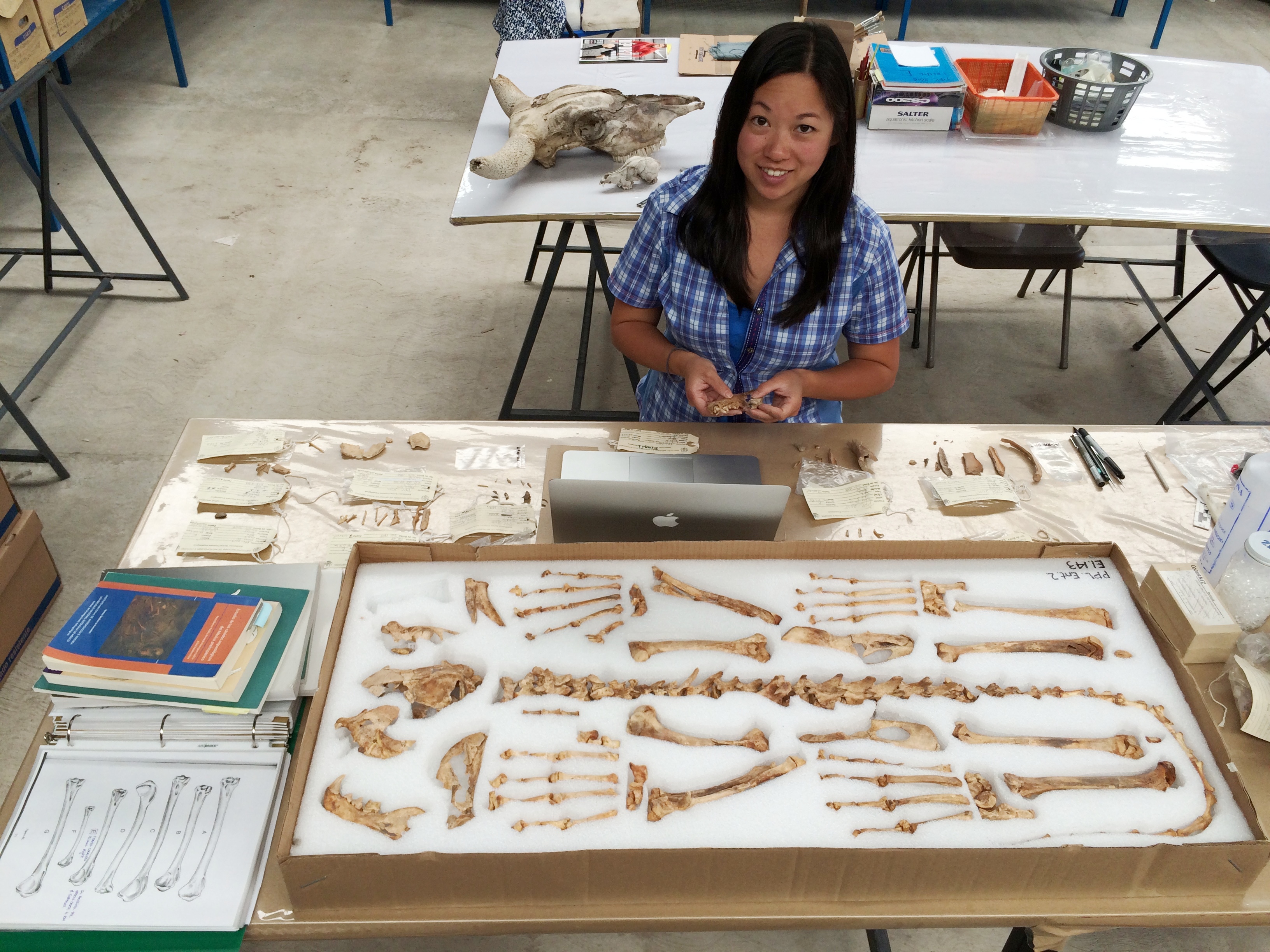
Teresa is manager for the Program in Human Ecology and Archaeobiology at the National Museum of Natural History, Smithsonian Institution. She received her Master’s degree in Osteoarchaeology at the University of Southampton, England, where she conducted research using ancient DNA from Pleistocene guanacos of South America. Her background and expertise continue to span across a number of disciplines, including forensic anthropology, human skeletal biology, animal domestication, as well as comparative and functional morphology.
Teresa has worked with the Smithsonian Institution since 2011 on the organization, conservation, and management of the PHEA’s collections of modern, archaeological, and paleontological skeletal remains and artifacts. She joined the project in 2015. With her background in conservation and osteology, she helped curate maxilla necklaces from previous excavations at Teotihuacan, as well as processed skeletons for a new comparative osteological collection for the project. She has returned to Mexico to analyze the bone material.
Leila Martinez (2017)
Leila is a graduate student at George Mason University where she studies zooarchaeology. Leila began studying with Dr. Sugiyama as an undergraduate research assistant through the OSCAR (Office of Student Scholarship, Creative Activities, and Research) program at George Mason University and went on to be awarded funding through the OSCAR undergraduate research grant in order to do analysis of archaeofaunal material at Teotihuacan over the summer. Leila is particularly interested in human-animal relations and what they can tell us about past societies and is continuing to do research and ask questions about humans and animals at the graduate level.
Esther Aguayo (2019, 2022, 2025)
Esther is a zooarchaeologist. She received her B.A. in Anthropology from San Diego State University and is currently working towards her M.A. in Anthropology at George Mason University. She has worked at the San Diego Natural History Museum’s zooarchaeology lab, teaching guests about zooarchaeology and identifying animal remains from local archaeological sites. At George Mason University, Esther had the opportunity to prepare samples from Plaza of the Columns for isotope analysis and taught undergraduate students the processing of osteological material. In 2019, she joined the Plaza of the Columns Complex Project at Teotihuacan to conduct an analysis of deer assemblages found at the Plaza of the Columns Complex in order to investigate the role deer had in ancient times.
Andrew Somerville (2019, 2022-2023)
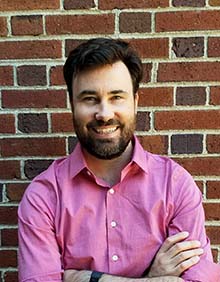
Andrew Somerville is an Assistant Professor of Anthropology at Iowa State University. There he serves as director of the Paleoecology Laboratory, the director of the Forensic Sciences graduate certificate program, and is a faculty member of the interdisciplinary graduate program in Ecology and Evolutionary Biology.
He has participated in archaeological field projects in the Southwest United States, in northern and central Mexico, in southern Peru, and in the Saharan Desert of northern Niger. Dr. Somerville’s research uses bioarchaeological methods, particularly skeletal biology and stable isotope analysis, to investigate various aspects of human ecology.
Dr. Somerville has been collaborating on research at Teotihuacan for several years. Together with Dr. Nawa Sugiyama, he has studied the food production systems of the ancient city.
Edsel Rafael Robles Martínez (2022-2025)
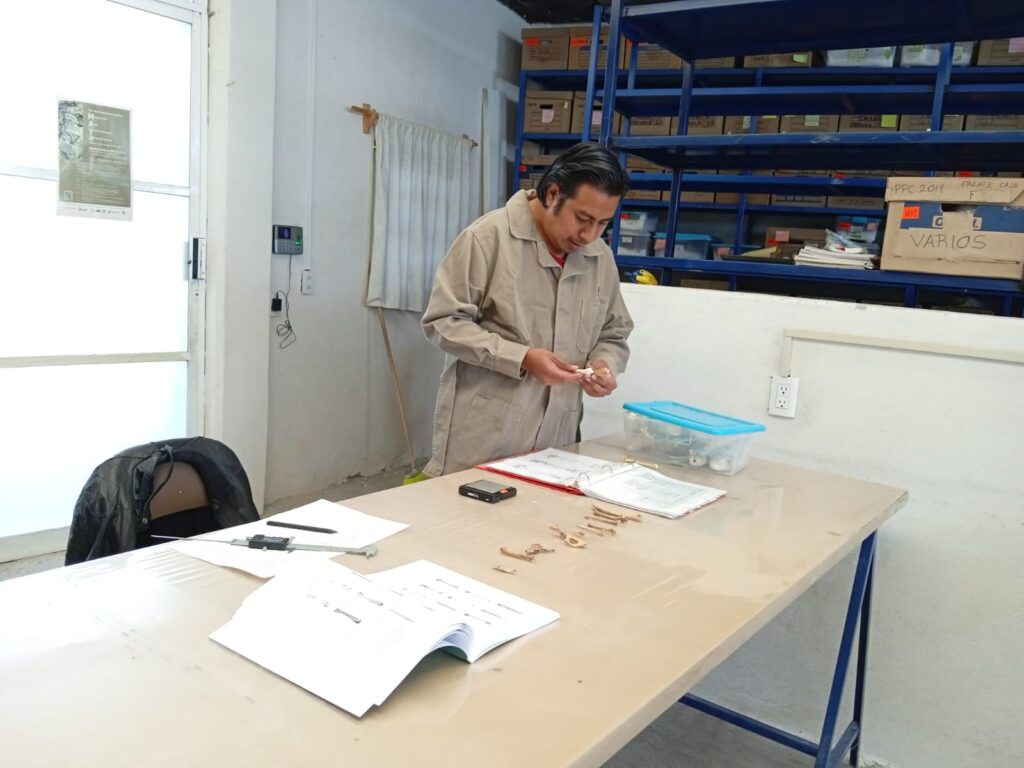
Edsel received his B.A. in archaeology from the Escuela Nacional de Antropología e Historia (ENAH) and his M.A. in Mesoamerican Studies from the Universidad Nacional Autonóma de México (UNAM).
He specializes in analyzing archeozoological remains. He has worked with collections from the following archaeological sites: Tamtoc, S.L.P., Chalchihuites, Zac., Cantona, Pue., Templo Mayor de Tenochtitlán, Tula, Hgo., and Tlayacapan, Mor. Edsel is particularly interested in taphonomic processes and studying artifacts manufactured from osseous remains, characterizing traces of manufacture and traces of use.
He has worked in the Paleoethnozoology Laboratory (ENAH) and the Laboratory Ticúl Álvarez Solórzano (INAH).