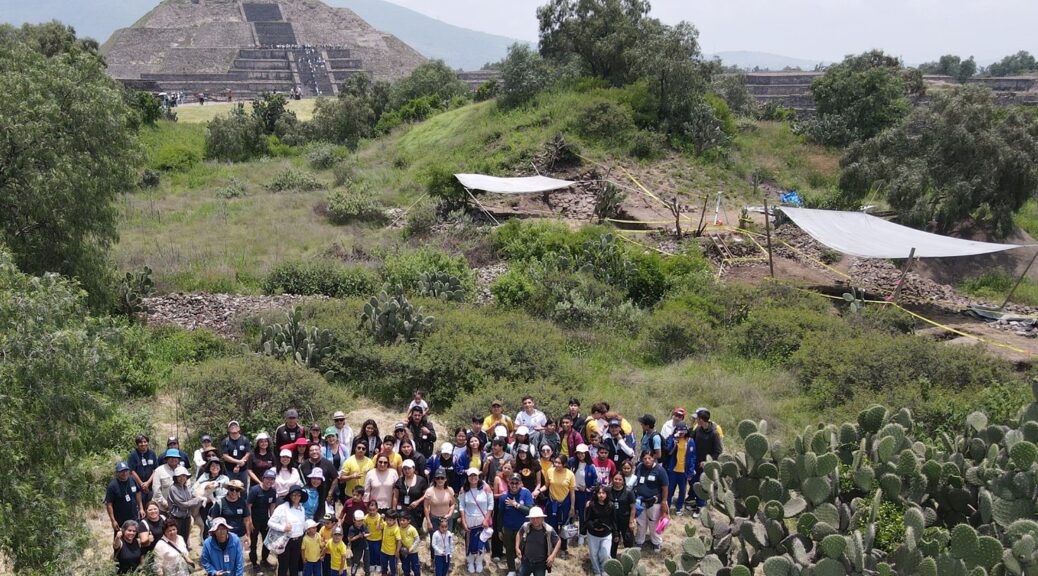
Welcome students of Xochicalli School to the PPCC
Author: Edsel Robles
Translation: Yun Ge
Editors: Thania Ibarra and Sol Téllez
Photographs: Mayté Espinoza
The excitement of the visit from the Xochicalli School students
One week before, our PI, Dr. Nawa Sugiyama, informed us that we would be receiving special visitors at the Plaza of the Columns. Our primary visitors are researchers, but this time they would be preschool and high school students. At first, we were a little hesitant, because none of us had studied pedagogy before, but the enthusiasm of looking forward to meeting them, and our experience with family members of various ages encouraged us to accept the challenge of making a wonderful visit. As hosts, we want all our visitors to have a great experience in the field.
Preparing the work
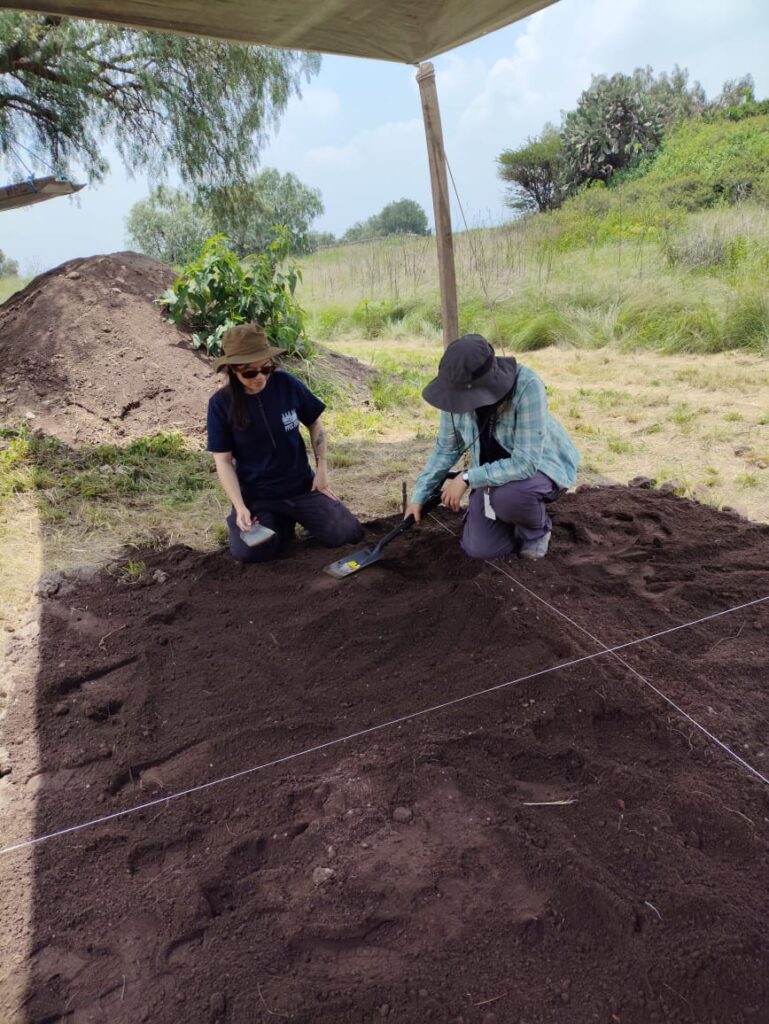
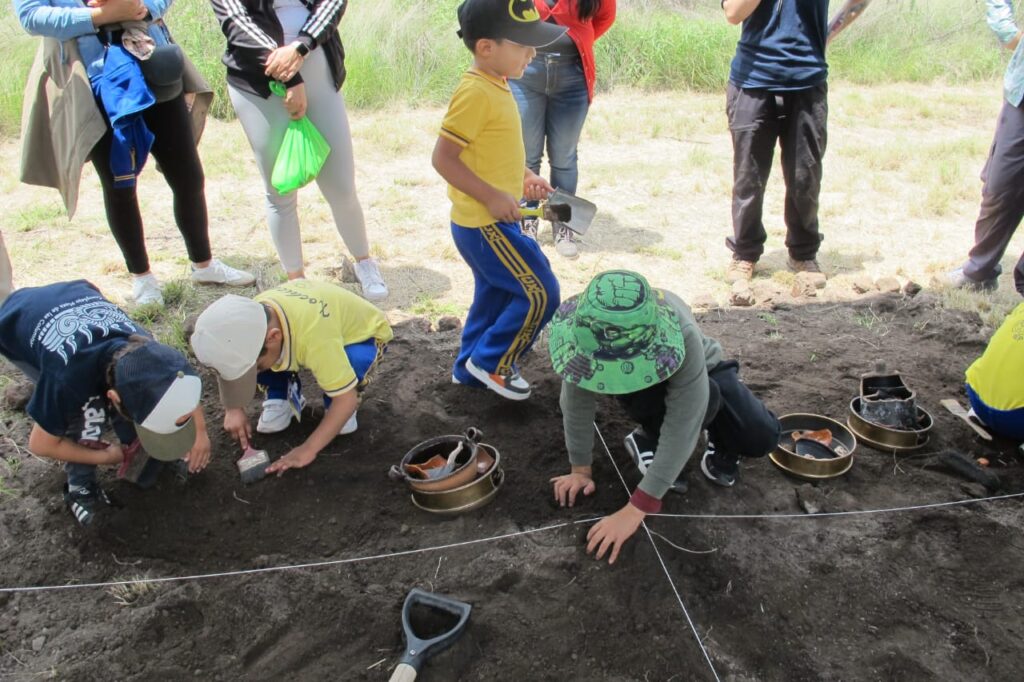
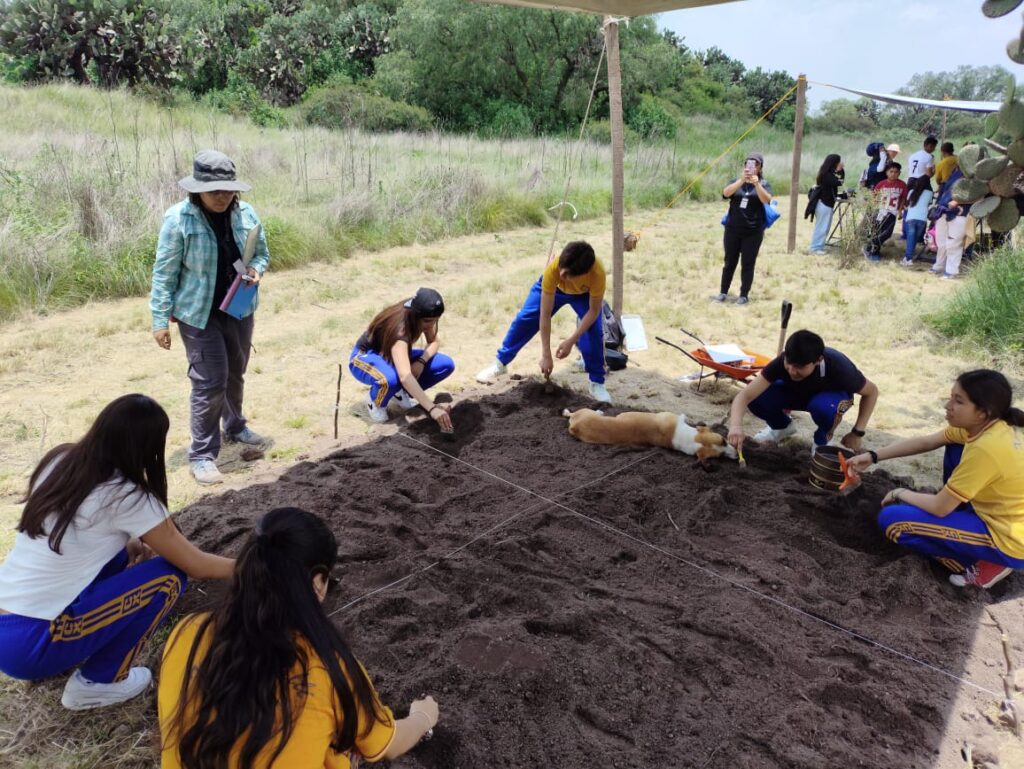
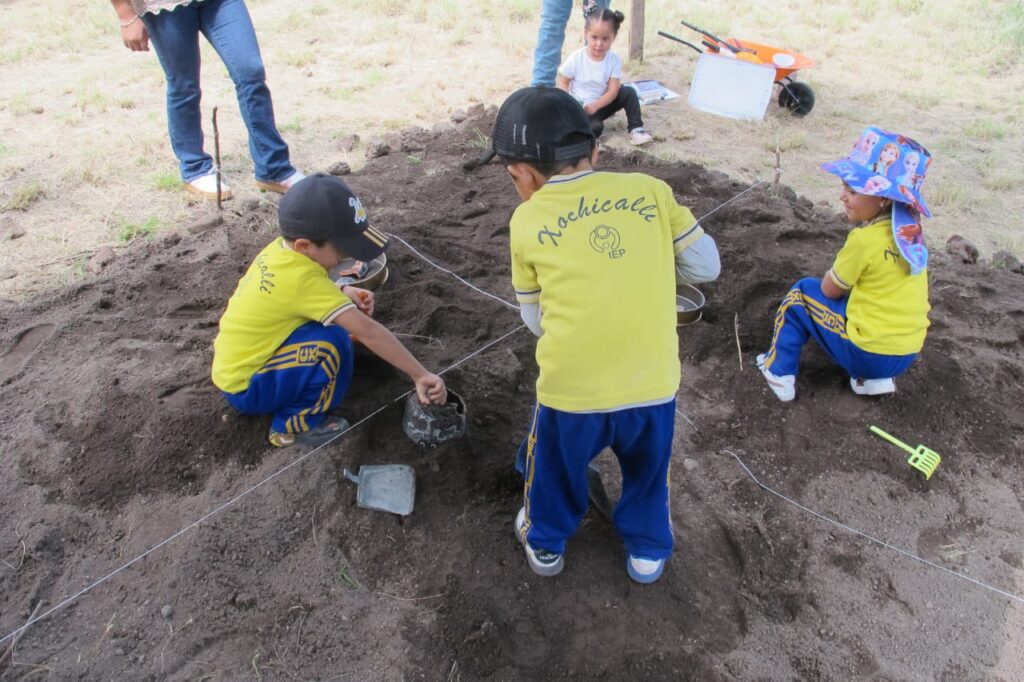
Among all the archaeologists, we brainstormed and designed various activities for the visitors to empirically experience archaeology. The most essential part of archaeology is its excavations and studies based on the major discoveries; therefore, the main activity was to make a small contextual excavation. To make it real, we buried different materials in the artificial deposit beforehand, including ceramics, bones and shells. We intentionally exclude the obsidian to avoid cutting accidents. A 3 x 3 meters “archaeological grid”, delimited by stones, was marked out. To protect our visitors, anything that could cause the mishap was removed. We used sifted soil from our own excavations, and the modern artifacts were placed simulating archaeological contexts. The ceramic pieces we were able to obtain were made by Teotihuacan ceramists and have a similar appearance to archaeological artifacts, making this connection between the past and the present even more realistic.
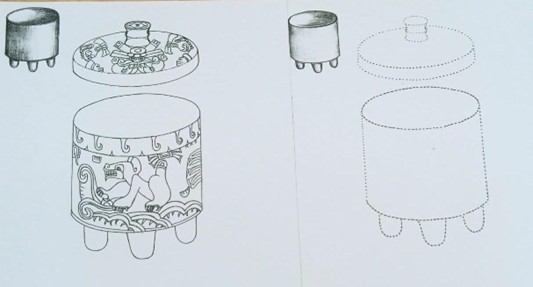
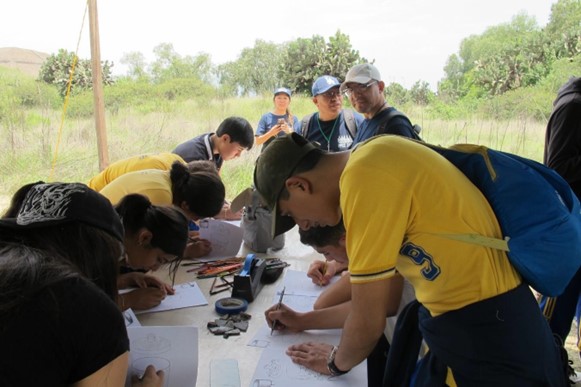
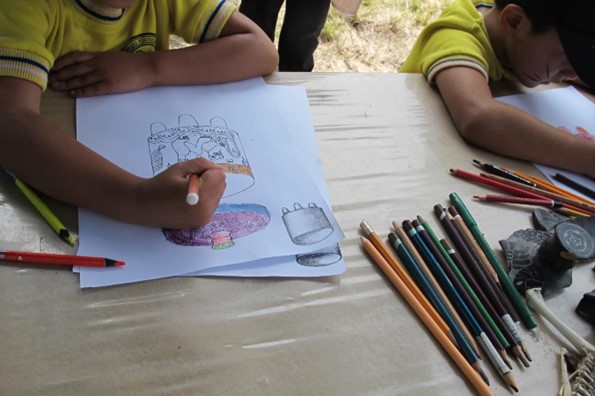
Suggestions were also made for activities the children would undertake after the excavation, such as a field laboratory. Proposed ideas—including puzzles, stories, diagrams, and drawings—were submitted to a vote. We also communicated with family members to find out the preferences of the children based on their age. In the case of drawing pieces, our project artist, Ramiro Medina, made two proposals based on a modern Teotihuacan vase. The first proposal was for the preschool children, which consisted of coloring the vase. For the adolescents, the proposal was simply to place guide points for them to complete the rest of the drawing.
Staging
On Monday, July 14th, in the Plaza of the Columns at the Teotihuacan archaeological site, we finally met the students from Xochicalli School, located in the municipality of San Juan Teotihuacan.
The visitors included both second-year preschool and third-year high school students. Our goal was to share the project’s ongoing activities and to introduce the children to the pre-Hispanic heritage that surrounds them. By reaching out to elementary schools in the communities around the site, we hope to inspire local children—potential archaeologists and future residents of the area—to stimulate their interest in their cultural heritage. In doing so, they may become valuable allies in the preservation of the archaeological remains found throughout their communities.
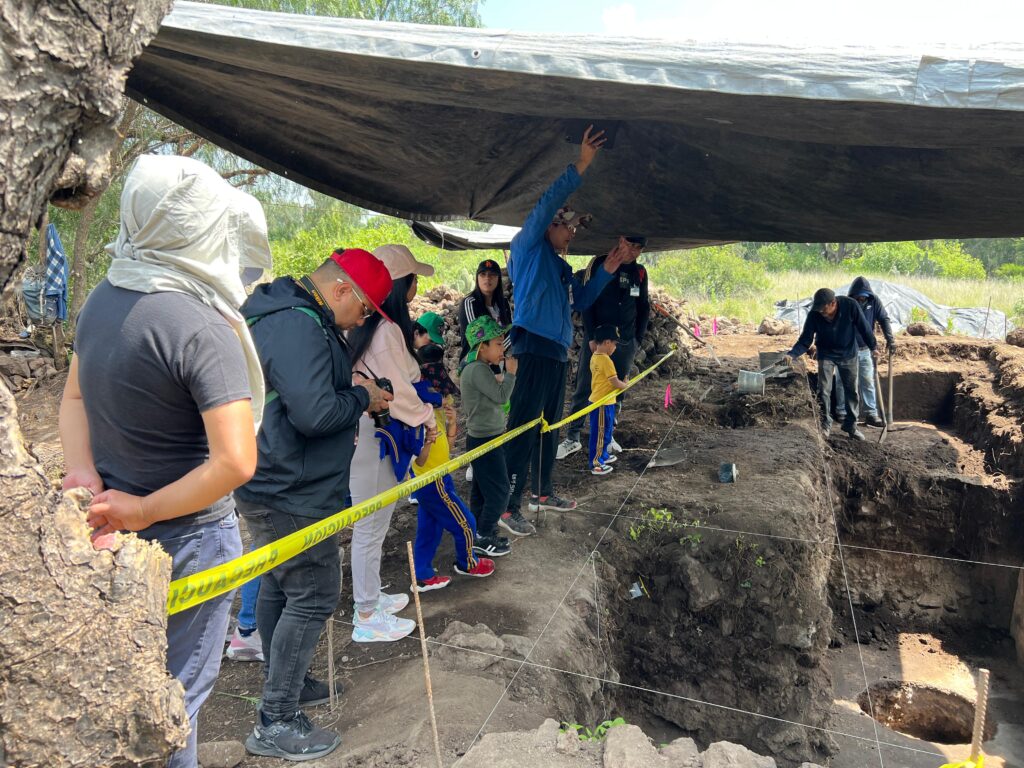
To facilitate meaningful engagement, the students were divided into smaller groups. Three thematic stations were prepared for their visit: a tour of our archaeological excavations, a simulated excavation, and activities in the field laboratories.
“Those mounds you see”
The first activity was a guided tour of the ongoing excavations in the Plaza of the Columns. Students learned that many of the mounds and raised areas visible on the surface often correspond to ancient structures buried beneath the ground. In this area, for example, original floors and walls become visible after removing just a few centimeters of soil, allowing a glimpse into the architectural past hidden below the surface.
The Excitement of Excavation
The second station featured a simulated excavation designed to teach visitors about the importance of the archaeological record and how context helps us interpret the materials we uncover. This hands-on experience sparked a genuine sense of discovery among both the younger children and the teenagers. The children participated with great enthusiasm, guided by archaeologists Thania Ibarra and Sol Téllez, while the teenagers approached the activity more carefully, showing a greater attention to detail as they explored the different layers and contexts.
Debunking Myths
While the visitors participated in the excavation, conversations with the archaeologists continued. The young people raised questions about the dating of the materials and frequently asked about the role of heritage in modern society. Another recurring question among the various groups was what happens if a family member has archaeological artifacts or if there are remains on the property of an acquaintance. In response, the researchers explained that the INAH does not confiscate artifacts that people legally possess, nor are their properties at risk. The importance of not removing archaeological materials found in homes and land was discussed, as important data such as the context would be lost. The importance of contacting the INAH was emphasized, as it is the institute responsible for protecting the country’s heritage and enriching our knowledge of our past.
What’s next?
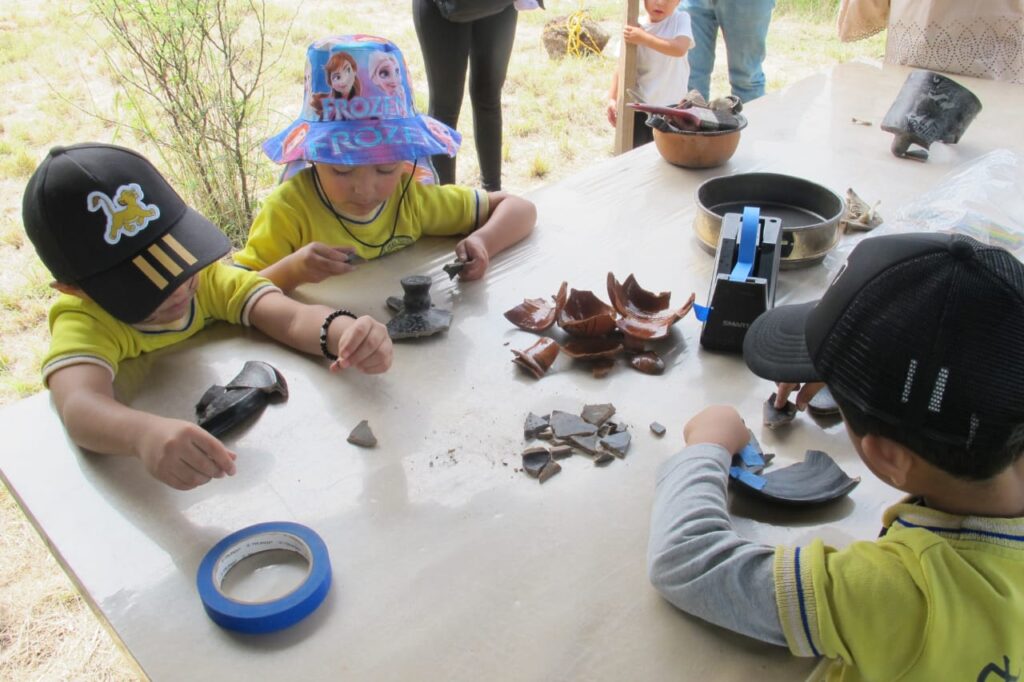
The third activity focused on demonstrating the post-excavation analyses carried out in our laboratories, including cleaning the excavation materials and assembling the broken pieces. This was the part of the visit that sparked the most enthusiasm among students of all ages.
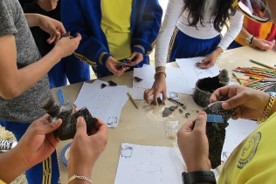
Additionally, there was a Zooarchaeological lab where students learned about the important role animals played in the ancient city of Teotihuacan. Beyond their use as a food source, animals contributed fur, served as pets, and even inspired mural paintings, becoming characters in local stories and legends.
Finally, in the laboratory area, we had the participation of Ramiro, our project’s artist and draftsman. Using a modern made Teotihuacan style vase, the children had helped unearthed during the excavation, Ramiro recreated his work with the visitors, who, depending on their age, were asked to color or draw lines to reproduce the design of the pieces. This activity allowed the artist to observe the different attitudes and aptitudes of the participants. For the younger children, the researcher shared his observations with their parents and offered suggestions on how to nurture their children’s talents. With the adolescents, he provided immediate feedback to help them improve their drawing skills.
Connecting with Young People
The young people were told that Teotihuacan was a great city, home to different ethnic groups, seats of power, architectural periods, etc. From this, the adolescents developed different interests, such as: the most valuable materials, their fashions, trends in building decoration, and the types of construction.
Our Impressions
This activity turned out to be even more rewarding than we had imagined. The active participation of the students—along with the genuine interest shown by parents and teachers, and the wide range of questions and curiosities—demonstrated how deeply the city of Teotihuacan continues to resonate with its local communities. It also reminded us of the many secrets the site still holds, secrets that may one day help us answer those unresolved questions.
We eagerly look forward to welcoming more students from the surrounding communities to explore and connect with the great pre-Hispanic city of Teotihuacan.
We would like to thank Jesús Torres from the Department of Museums and Educational Communication at the Archaeological Site of Teotihuacan for his support in coordinating this visit, as well as Rogelio Rivero Chong, Director of the Archaeological Site of Teotihuacan.
